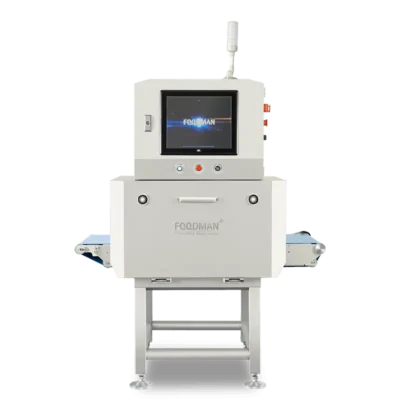
Commercial packaging lines face extreme difficulties when inspecting sealed consumer goods made from multi-layer laminates and metallized foil materials. Traditional optical cameras bounce harmlessly off exterior package walls, failing to detect dangerous foreign bodies hidden inside sealed compartments.
Deploying a specialized food X-ray machine solves this challenge by leveraging penetrating radiation to inspect sealed food contents directly. Food manufacturers must implement packaging-specific radiological protocols to protect consumer safety and prevent costly retail product recalls across complex distribution channels.
Penetrating Multi-Layer Barrier Films and Metal Cans
Aluminum cans and metallized barrier films create severe radiation attenuation barriers that block conventional inspection equipment entirely during active production shifts. Standard metal detectors frequently fail when scanning foil-wrapped packaged foods due to severe product effect interference and electrical conductivity distortions.
Processing lines handling sealed metal containers require high-energy radiological generators capable of punching through dense packaging walls without losing internal clarity throughout extended operational windows.
Adjusting photon beam intensity allows internal sensor arrays to capture clear images without saturating detector pixels during active processing runs. Foodman engineers specialized high-voltage generator configurations tailored specifically to penetrate thick aluminum and foil packaging matrices safely across diverse retail categories. Proper beam calibration ensures that heavy container seams do not mask foreign particle signatures during high-speed production schedules.
Precise density profiling prevents packaging edges from triggering false alarms on operator display monitors across multi-shift manufacturing environments.
Maintaining stable radiation output remains vital when processing varying thicknesses of commercial food packaging containers daily. Tailored penetration parameters guarantee complete internal visibility across every sealed retail unit moving down the active transport line prior to final distribution.
Detecting Contaminants Embedded Inside Hermetic Package Seals
Microscopic metal shards, glass fragments, and bone splinters frequently migrate during sealing operations, becoming trapped directly within package seals. Standard inspection zones often miss these hazards because sealing ridges create complex density variations along the package perimeter.
Advanced radiological algorithms must isolate seal boundaries from the main product cavity to catch embedded debris effectively before shipment dispatch.
Detecting foreign objects within hermetic seals requires high-resolution digital sensor arrays that measure minute gray-scale pixel shifts accurately. Software platforms like Foodman Vision isolate sealing margins instantly, flagging dense particles trapped inside heat-sealed plastic or foil edges across global retail networks.
Targeted boundary analysis prevents compromised packages from maintaining commercial distribution integrity.
Isolating seal contamination protects retail consumers from severe dental and internal injuries caused by rogue manufacturing fragments during consumption. Automated software eliminates human oversight errors during high-speed packaging runs where visual checks fail completely under heavy volume pressure. Rigorous seal inspection safeguards brand equity across competitive retail supply chains worldwide.
Verifying Complete Component Fill Levels in Multi-Pack Cartons
Packaged food quality assurance extends beyond contaminant detection to verify correct volume fills and missing internal components inside cartons. Multi-pack trays and boxed food items often suffer from incomplete product insertion or under-filled compartments before final sealing occurs. Radiological screening evaluates internal mass distributions to confirm that every retail package contains exact portions prior to secondary packaging.
Digital density mapping detects missing product rows inside sealed cardboard boxes and opaque plastic trays instantly without opening containers. Integrating a second food X-ray machine into final packaging stages ensures complete shipment accuracy before shrink-wrapping occurs. Plant managers rely on automated fill-level verification to eliminate customer complaints received from retail buyers.
Continuous mass auditing safeguards brand reputation and compliance with strict commercial weight-and-measure regulations governing global retail markets.
Automated data logging records every fill discrepancy, providing actionable insights for upstream packaging machine adjustments operating in modern facilities. Comprehensive radiological verification completes the ultimate quality assurance framework for packaged foods.
Executing Microsecond Rejection Dynamics for Sealed Retail Containers
Detecting a contaminated package provides zero operational value if downstream rejection hardware fails to remove it instantly from the line. Heavy glass jars, rigid tin cans, and flexible pouches demand robust pneumatic pushers tailored to specific container weights. Conveyor velocity must synchronize precisely with X-ray capture timing to prevent spatial tracking errors through active inspection zones.
High-speed pneumatic actuators strike defective containers with calculated force, clearing them from transport belts immediately without operational delay. Maintenance crews inspect valve seals regularly to prevent pressure drops during intensive multi-shift packaging operations. Reliable physical diversion prevents contaminated retail units from mixing with certified product batches destined for store shelves.
Foodman integrates specialized pneumatic rejection assemblies engineered explicitly for heavy packaged food containers and delicate pouches alike. Custom diversion architecture ensures precise physical interception regardless of container shape or weight variations across shifts. Robust mechanical performance eliminates operational bottlenecks across demanding commercial food plants running at maximum capacity.
Integrating Digital Traceability and Regulatory Audit Data
Global retail chains and regulatory agencies mandate strict digital audit trails for all critical control points across packaging facilities. Automated logging systems record every inspection event, timestamp, and rejection cause to satisfy rigorous food safety standards. Comprehensive data archives empower quality managers to perform rapid root-cause investigations during routine compliance reviews when upstream anomalies occur.
Advanced platforms like Foodman Vision export real-time compliance logs directly to enterprise resource planning software networks smoothly. Centralized record-keeping eliminates manual paperwork errors and reduces administrative burdens across plant management teams significantly. Total data transparency builds immense trust between food manufacturers and global retail partners operating worldwide today.
Deploying a final food X-ray machine paired with Foodman Vision software completes an elite inspection ecosystem. Foodman delivers rugged industrial architectures designed to withstand frequent washdown cycles and corrosive chemical cleaning agents operating under harsh conditions. Heavy-duty stainless steel construction ensures long-term durability in high-moisture commercial food processing environments.
