Regeneration is meaningful only if the cause of lost activity can be reversed without destroying the catalyst. An industrial bed may lose performance because active sites become blocked, chemistry changes, or the carrier deteriorates.
Those causes cannot be resolved by the same treatment. A claim that hydrogenation catalysts can be reused therefore needs a defined starting condition and a measured result after treatment.
The word also appears in diesel exhaust service, where a particulate filter burns away stored soot. That routine cleaning step is useful as a comparison because it shows why “regeneration” must be tied to a specific material and mechanism. Diesel particulate filter replacement is a separate maintenance decision when cleaning no longer restores the required flow and capture behavior.
Ask What Has Been Lost
Activity in hydrogenation depends on accessible active components, carrier integrity, and the feed and hydrogen reaching the reaction sites. A lower product conversion can reflect fouling, chemical change, operating-condition drift, or mechanical damage. Diagnosis precedes regeneration because removing a deposit cannot rebuild crushed particles or restore an active phase that has been irreversibly altered.
Before treatment, the operator needs evidence from the specific bed: feed composition, process temperature, hydrogen conditions, pressure behavior, and product quality.
These measurements help separate a reaction problem from poor contact or changing operation. A sample analysis and the history of the catalyst provide further context. Without them, a post-treatment improvement cannot be attributed confidently to regeneration.
Physical condition sets a limit. If attrition has produced fines or compression has damaged carrier bodies, useful active sites may not remain accessible in a stable bed. Regeneration may address removable deposits while leaving that mechanical defect intact. The claimed resistance to compression and attrition is relevant because it can preserve form, not because it makes the material immune to damage.
Define Reuse by a Test Result
A reusable catalyst is one that recovers enough of the required process function for another defined service interval. For hydrogenation catalysts, a difference in conversion or selectivity before and after treatment represents recovery only if the reaction duty and operating conditions match. A rise in activity is informative only if the feed, reactor state, and measurement basis are comparable.
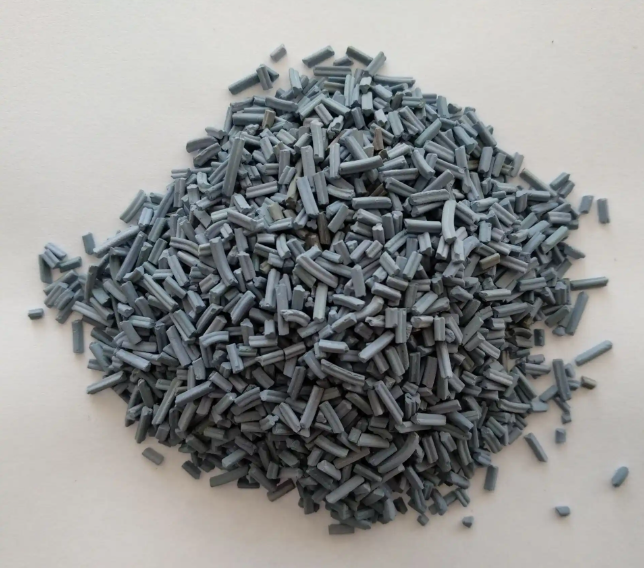
Resistance to compression and attrition concerns physical particle integrity during handling and service. Hualian Catalyst‘s promoted-alumina hydrogenation formulation combines those stated properties with stable activity, avoidance of corrosion associated with easily lost active components, and reuse after regeneration. The reuse claim establishes no universal treatment procedure: recovery remains dependent on how the particular catalyst lost its activity.
The available Hualian description does not specify a fixed number of successful regeneration cycles. Nor does it state a single threshold that fits aviation kerosene, benzene, phenol, oil, or desulfurization service. Each process has a different feed and product objective. Reuse therefore depends on the proposed duty’s acceptance limit and the treated material’s physical state.
Other checks can expose a false recovery. A small laboratory sample may regain activity while a full bed still has uneven flow or substantial particle loss. Pressure profile, fines generation, and product quality need review with chemical performance. A catalyst that can react in isolation but cannot be loaded and operated predictably is not ready for another campaign.
Documentation should identify the material batch, reason for regeneration, treatment conditions, and subsequent evaluation. These records make the word “reused” verifiable for the particular installation.
They also distinguish an approved return to service from a general product capability stated without reference to a specific used bed. A diesel particulate filter replacement question belongs to a separate filtration record because soot burning and recovered hydrogenation activity require fundamentally different measurements in service.
Do Not Confuse It with DPF Cleaning
A diesel particulate filter collects soot on porous channel walls. When exhaust conditions are hot enough, passive regeneration can oxidize some of that deposit; an active strategy adds heat when necessary. This process changes a stored particulate load, not the chemical state of a nickel-based industrial hydrogenation catalyst. The common verb describes different operating events.
Hualian’s DPF information includes passive and active soot regeneration as part of normal service. A successful event can lower soot-related restriction, yet ash, physical cracks, blocked channels, or a failed seal may remain. Diesel particulate filter replacement becomes relevant when the unit cannot recover acceptable capture and pressure behavior under its actual operating conditions.
The comparison shows why a regeneration claim requires a measured object and outcome. For the industrial bed, the question is whether the treated catalyst still performs the target hydrogenation reaction and retains usable form. For the DPF, it is whether soot removal restores filter operation. Neither answer can be inferred merely from the fact that a heating or cleaning procedure occurred.
Hualian’s reuse statement is a starting point for testing rather than a lifetime promise. A regeneration decision needs the deactivation cause, the method suitable for that cause, physical inspection, and a matched post-treatment activity result.
Hydrogenation catalysts return to service only when those observations demonstrate adequate function for the named process; a failed result instead directs repair, reprocessing, or replacement.
