Two completed parks can have similar areas and very different attraction mixes. A long hillside slide and an indoor collection of rides pose different questions again. Reading a reference involves identifying which part of a completed project can usefully inform the development now under consideration.
The record supplied by a water park supplier can contain several kinds of evidence: site dimensions, ride descriptions, manufacturing responsibilities and operating context. These details gain meaning through comparison. The starting point is the uncertainty that the reference is being asked to resolve for the proposed project.
Identify What Each Measurement Describes
An area figure may describe a whole site, an indoor zone or a particular equipment footprint. Those boundaries affect the comparison. The space available for attractions cannot be inferred until circulation, guest facilities and other uses are distinguished from the number being presented in the reference.
The cases published by water park manufacturers can also describe slide length or ride duration. Length follows a route; duration describes an experience along it. Neither automatically identifies the equipment’s ground footprint, the time between dispatches or the number of riders that a venue can serve.
Units therefore need their accompanying labels. A measured route and a project area can both be useful while answering different questions. Keeping the original boundary and qualification attached to each figure prevents a striking number from becoming a specification for an unrelated development.
Match the Site Constraint before the Scale
The most relevant reference may share a difficult condition rather than an overall size. A hillside creates route-alignment questions, an enclosed building establishes a fixed envelope, and an existing pool can constrain installation access. The comparison becomes more precise when that condition is named first.
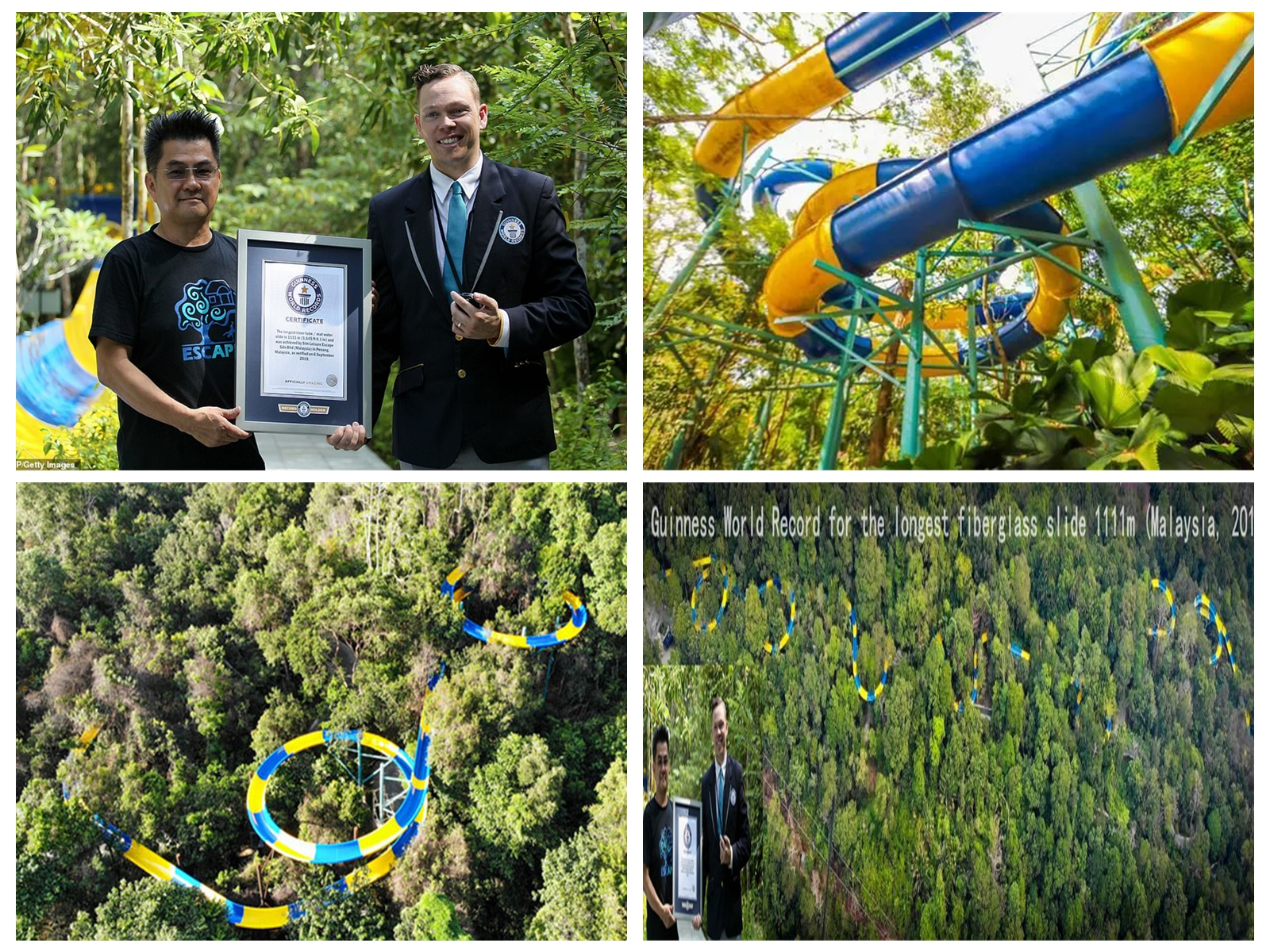
Jinchao manufactured the 1,111 m slide at ESCAPE Penang in Malaysia, where the route follows a forested hillside. The published ride duration is approximately three minutes. Design adjustments accompanied manufacturing and installation planning along the hillside. For a water slide manufacturer, that reference illustrates a terrain-adapted route; the duration is an experience measure, not a dispatch interval.
Its Kazakhstan reference describes an approximately 12,000 m² indoor water park. Its attractions include wave pools, racing lanes and bowl slides. An enquiry to the water park supplier can therefore distinguish an enclosed-building example from the Penang route. The useful connection concerns the constraint relevant to the proposed site, rather than simply choosing the larger or longer reference.
Read the Attraction Mix within the Area
Jinchao’s Algeria and Myanmar references each describe projects of approximately 20,000 m². Algeria includes wave equipment, Tornado, skateboard-style, spiral, ring, enclosed and racing attractions. The Myanmar case identifies more than ten equipment types, including Tornado, aerial, spiral, vertical and rainbow slides alongside wave attractions.
Equal areas do not make those packages equivalent. A comparison of water park manufacturers can examine which experiences were combined and how closely they resemble the intended offer. A reference with a relevant attraction mix may answer a different procurement question from one demonstrating a particular route geometry.
The case description also has limits. A list of equipment establishes the stated mix, but does not supply attendance, revenue or an operating-cost comparison. Those measures would need their own evidence. The attraction package remains useful without being turned into a claim about commercial outcomes.
Locate the Supplier’s Contribution
A completed development involves design, manufacturing, local construction and operation. The role named in a case determines what experience it demonstrates. A manufacturing reference can show delivery of specified equipment, while responsibilities for other project stages still need to be established for the current purchase.
For a water slide manufacturer, a relevant question concerns the equipment supplied and the support connected with its installation. Jinchao‘s Penang description identifies manufacturing and project support for the terrain-adapted slide. That role provides a more specific basis for discussion than treating every participant’s work as one undivided service.
A project team can ask the water park supplier which documents or operating contacts relate to the comparison being made. An installation question and a question about daily use may need different respondents. Clarifying that distinction gives the reference enquiry a practical destination and an identifiable subject.
A reference can also belong to a different stage in the equipment’s working life. An operator discussing a recently opened attraction may answer different questions from one with several seasons of maintenance records. The stage needs to be identified before comparing those accounts.
Turn the Reference into a Project Question
Reference selection becomes more disciplined when each case is paired with a question. One may concern working within a building; another may concern assembling a varied attraction package. Building constraints and equipment coordination then become separate reasons for requesting the drawings associated with each reference.
The next discussion with water park manufacturers can connect that question to the proposed site and equipment brief. Similarities identify the evidence worth exploring, while differences identify where a new answer is required. A previous installation is a useful reference without becoming a ready-made plan for another location.
The contribution expected from a water slide manufacturer can be examined on the same basis. The enquiry can identify which equipment and installation support the named supplier provided. An operator reference can separately address how the installed attraction has been used and maintained over its own period of service.
