Data-center traffic is growing through cloud services, distributed storage, and accelerator-based computing. When they plan new switch fabrics, 800G links provide a practical way to increase port capacity without multiplying physical connections at the same rate.
The technology is becoming a current deployment topic because it sits between established lower-speed modules and emerging 1.6T roadmaps. The 800G label describes aggregate throughput, not one fixed design. Modules may use different electrical lanes, optical lanes, modulation formats, fiber types, and reach classes.
They therefore compare products at the architecture level, checking whether the host interface, cabling, thermal envelope, diagnostics, and network topology support the chosen implementation. In today’s photonic applications, the 800G optical transceiver serves data-center direct-detection links and can also appear in coherent telecom systems.
They keep these use cases separate because their receivers, modulation, reach, and operating margins differ, even though both require high bandwidth, controlled optical loss, and repeatable multi-channel performance.
800G Addresses Immediate Fabric-Capacity Pressure
AI and cloud fabrics need high east-west bandwidth between switches, servers, and accelerators. Increasing port speed can reduce the number of parallel links and simplify some cabling, but oversubscription and topology still determine application performance. They use traffic models to decide where 800G creates measurable value rather than upgrading every connection by default.
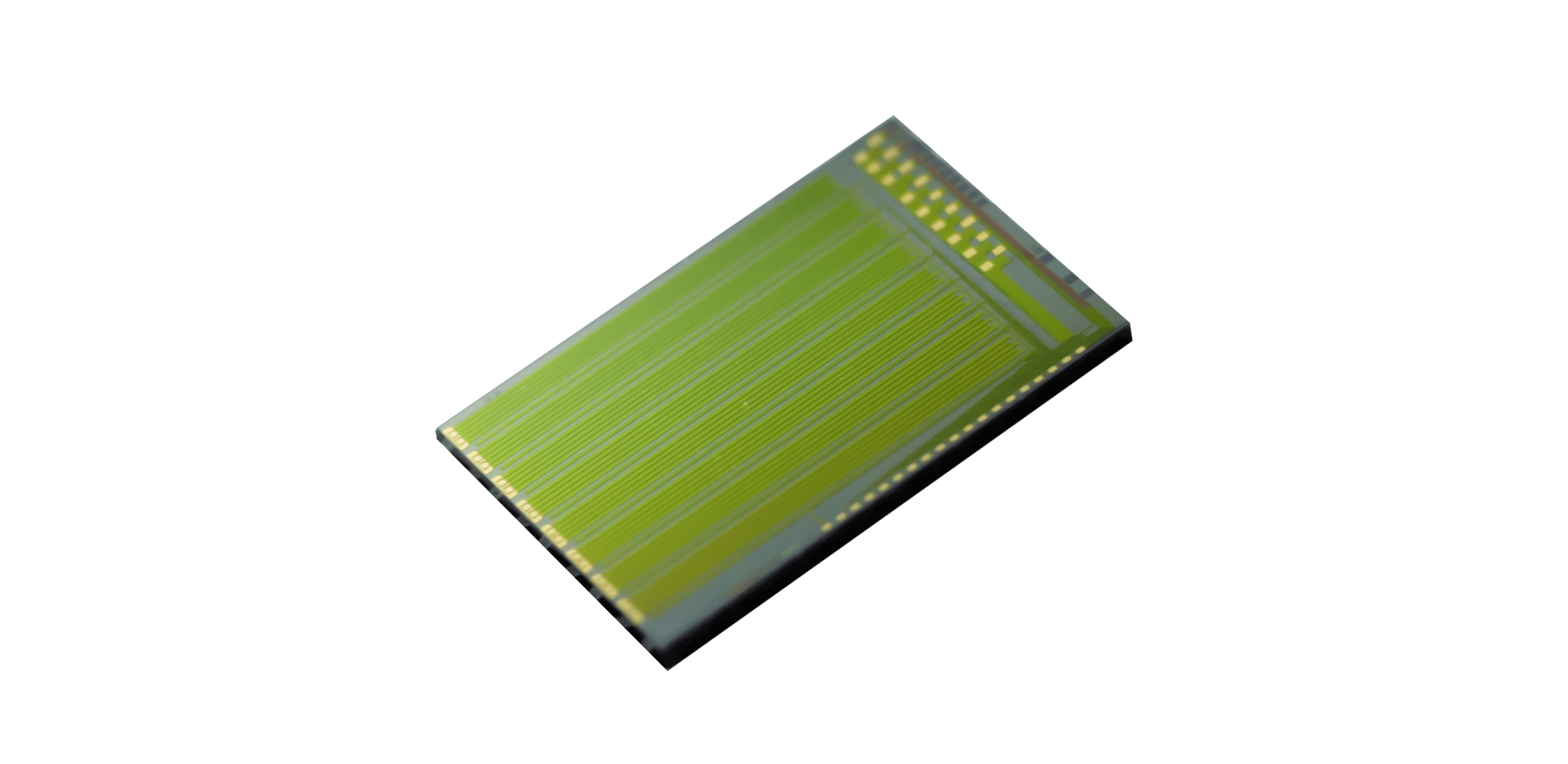
For 800G designs, Liobate says TFLN modulator chips can support a single continuous-wave laser. In photonic applications, a shared optical source and multi-channel modulation may improve integration. They evaluate source power distribution, coupling, redundancy, and channel balance so that simplification in one part of the module does not introduce a common point of failure.
An 800G optical transceiver also affects switch thermals. Faster ports can raise module power, and a densely populated front panel creates concentrated heat near switch ASICs. They measure power under representative traffic, confirm airflow and heat-sink contact, and review alarm or throttling behavior before approving dense deployment in production racks.
The step also changes how spare capacity is planned. One failed high-rate port can remove more traffic than a lower-speed link, so redundancy and rerouting need to be checked under realistic failure scenarios. They verify that the fabric can absorb maintenance events without creating congestion around the remaining links.
Module Architecture Determines Energy and Reach
Direct-detection 800G modules usually emphasize short reach, compact form factor, low power, and cost-effective fiber connections. Coherent 800G solutions emphasize wavelength efficiency, longer reach, and more complex signal processing. The selected architecture is determined by the route and network layer, so module comparisons should not mix fundamentally different operating objectives.
Liobate lists a 70 GHz PDMIQ chip for 800G and 1.6T ZR coherent modules. These photonic applications require linearity and stable complex modulation in addition to speed. They would qualify the device with the relevant driver, laser, receiver, and DSP because the packaged link response matters more than the material platform in isolation.
For an 800G optical transceiver, optical loss, transmitter power, receiver sensitivity, extinction ratio, error correction, and cable-plant loss must form one budget. They include patch panels, connectors, bends, and aging margin. A module that passes a short laboratory fiber may fail to provide enough margin through the actual data-center route.
Deployment Quality Depends on Interoperability and Supply
Interoperability testing is important. They check modules across host vendors, firmware versions, cable suppliers, temperatures, and expected reach. Diagnostics should report useful values and alarms consistently, allowing operations teams to distinguish a bad module from contamination, fiber damage, host issues, or thermal problems without lengthy manual investigation.
The 800G optical transceiver is also a supply-planning concern. Photonic applications at this scale rely on higher-rate optical engines, drivers, detectors, packaging, and test capacity.
They align forecasts with switch deployment and maintain appropriate spares, because rapid cluster expansion can be delayed when module supply does not match the pace of compute installation. For selected architectures, they can review Liobate as a TFLN component supplier. They would review bandwidth, voltage, insertion loss, channel data, packaging, and production capability.
The relevant question is how its modulator supports a complete module target, including power and yield, rather than whether the chip achieves an isolated peak result. Cost comparison should include usable port capacity, power, cooling, cabling, failure rate, and operational effort.
An 800G module may cost more than two lower-speed alternatives but still reduce switch ports or fiber count. They calculate total delivered capacity and lifecycle cost before deciding where the new speed is economically justified. They expect 800G to coexist with 400G and later 1.6T modules.
A staged deployment allows high-traffic links to be upgraded earlier while lower-demand connections remain on established technology. This preserves budget and gives teams time to build experience with cleaning, diagnostics, thermal management, compatibility, and inventory processes.
The supplier is relevant because its TFLN platform addresses modulation needs across data-center and telecom 800G designs. Deployment decisions will still come from end-to-end testing and disciplined sourcing. When power, link margin, interoperability, and supply are managed together, 800G becomes a practical capacity tool rather than a specification-driven purchase.
Early 800G deployments provide evidence that specification sheets cannot: interoperability patterns, thermal behavior, error history, and lot variation. If Liobate components are involved, those records can shape module limits, spare planning, and supplier follow-up.
