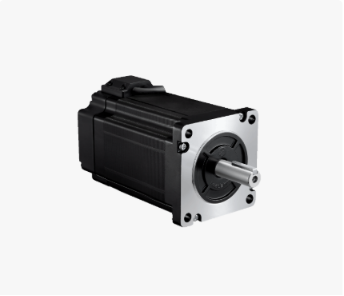
In the realm of precision automation, the demand for consistent, powerful motion at low rotational speeds is a common challenge. Applications such as heavy indexing, precise press-fitting, or slowly moving large masses require motors to deliver substantial torque without stalling or losing positional integrity. Traditional open-loop stepper motors can struggle with torque drop-off at higher speeds and risk step loss under load, while servo systems can be cost-prohibitive for many applications. This is where closed loop stepper technology emerges as a highly effective solution, expertly balancing performance, reliability, and cost. Manufacturers like Leadshine have refined this technology, offering systems that deliver robust low-speed torque, with specific models like their NEMA 23 closed loop stepper motor and drive combinations being particularly popular for compact, high-performance applications. Understanding how this technology achieves this capability is key for engineers designing reliable and economical machinery.
The Core Mechanism: How Closed Loop Control Ensures Torque Delivery
The fundamental advantage of a closed loop stepper system over its open-loop counterpart is the presence of real-time feedback. An encoder mounted on the motor shaft continuously reports the rotor’s exact position back to the drive. This creates a control loop where the drive can instantly detect any discrepancy between the commanded position and the actual position—such as when a motor starts to stall under a heavy load. Upon detecting a lag (a following error), the drive increases the current to the motor windings to apply more torque to correct the position and catch up. This active correction mechanism is what guarantees high torque delivery at any speed, including very low RPMs. It reduces the primary weakness of open-loop systems: the assumption that the motor follows every command perfectly. In a closed loop stepper system, this assumption is verified and enforced. Leadshine’s CS Series drives, such as the CS3E and CS2RS, are built around this principle. They monitor encoder feedback and are designed to react dynamically to load changes, ensuring that the connected motor—whether a NEMA 17 or a NEMA 23 closed loop stepper motor—maintains its commanded trajectory with full torque availability, preventing costly step losses and production errors.
Product Realization: Drive and Motor Synergy for Optimal Performance
Achieving reliable high torque at low speeds is not solely a function of control logic; it requires harmonious hardware design. Leadshine provides a synergistic closed loop stepper system where drives and motors are engineered to work together. On the drive side, models like the CS2RS Series offer robust current output (up to 8.2A) and support for high-resolution encoders (1000 to 5000 PPR), providing the precise feedback needed for tight control. These drives feature advanced algorithms that result in “low noise and vibration, smooth motion,” which is a direct consequence of stable torque control. On the motor side, the CM Series hybrid stepper motors, available in NEMA frame sizes including NEMA 23, are designed for performance. They are known for “high torque in all speed ranges” due to optimized magnetic circuits and rotor designs. When a NEMA 23 closed loop stepper motor from the CM series is paired with a compatible CS drive, the system leverages both the motor’s inherent torque characteristics and the drive’s corrective power. The drive supplies the necessary current, and the encoder confirms the rotor’s position, allowing the system to deliver its rated holding torque or even peak torque dynamically during motion, without the risk of losing steps.
Application Advantages: Where Low-Speed High-Torque Delivers Value
The practical benefits of this technological combination are realized in specific industrial applications. In automated assembly, a closed loop stepper system might be used to press a gear onto a shaft with a constant, controlled force at a very slow speed, ensuring proper seating without damage. In packaging, it could precisely control the tension on a heavy roll of material during slow, intermittent unwinding. The NEMA 23 closed loop stepper motor is a frequent choice in these scenarios due to its ideal balance of size and power, fitting into compact machine designs while delivering significant torque. Leadshine highlights that their drives perform excellently in fields like robotics, textile machinery, and precision packaging—all areas where controlled, forceful movement at low speeds is common. The system’s ability to maintain torque ensures consistent quality, while the closed-loop nature adds a layer of process reliability by verifying that each move is completed accurately. This makes the closed loop stepper a trustworthy and cost-effective alternative to more expensive servo systems in applications where extremely high-speed dynamics are not the primary requirement.
Additional Benefits: Beyond Just Torque
While achieving high torque at low speeds is a standout feature, adopting a closed loop stepper system from a supplier like Leadshine offers broader advantages that enhance machine design. First is energy efficiency; because the drive supplies current based on actual load demand (thanks to the feedback loop), it can reduce overall power consumption and motor heating compared to an open-loop system that runs at full current constantly. This aligns with the noted characteristic of “lower heating” in Leadshine’s CM series motors. Second is diagnostic capability. The control loop allows the drive to detect faults such as following errors or encoder issues, providing alarms that can preempt machine damage or quality defects. Finally, there is the benefit of simplified design. For many applications, using a NEMA 23 closed loop stepper motor and a drive with built-in motion profiles (like the PR mode in CS2RS drives) can reduce the complexity and cost of the overall control system, often eliminating the need for an external motion controller.
In conclusion, the challenge of delivering high torque at low speeds is effectively met by modern closed loop stepper technology. Through the integration of real-time encoder feedback, intelligent drive algorithms, and performance-optimized motors, systems like those from Leadshine ensure reliable, powerful, and precise motion. The popular NEMA 23 closed loop stepper motor configuration exemplifies this capability, offering a compact yet powerful solution for a wide array of automation challenges. By providing this reliable performance, Leadshine empowers machine builders to create equipment that is both robust and economical, ensuring that tasks requiring sustained force at slow speeds are executed with unwavering accuracy and reliability.
