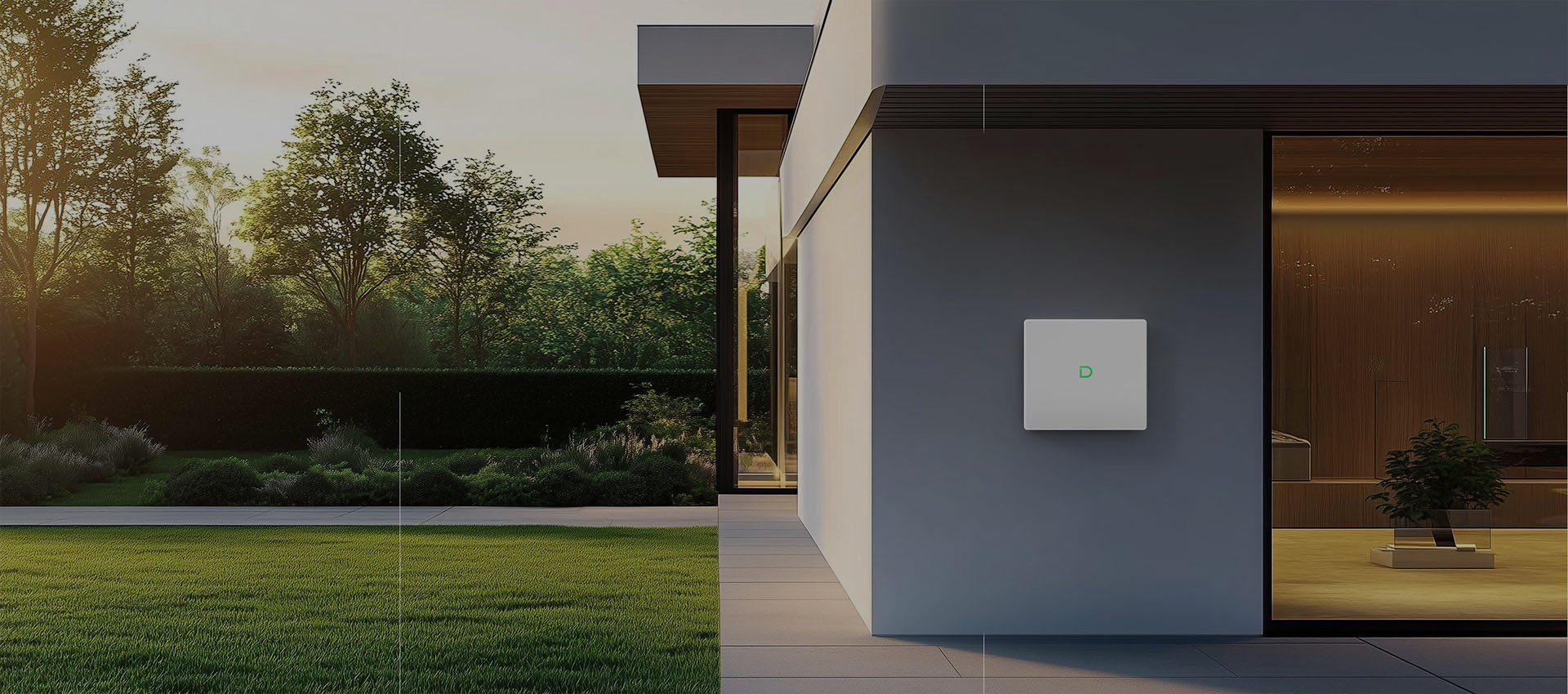
Modern residential architecture increasingly incorporates localized generation assets to counteract rising electrical tariffs and utility grid instability. Installing a Wall-Mounted 51.2V LiFePO4 Home Battery provides an efficient method for homeowners to store clean solar power, secure reliable backup electricity, and lower daily operational expenditures.
Sourcing the proper stationary hardware dictates an accurate assessment of physical chassis dimensions, cell safety chemistry parameters, and automated battery management protocols. Property owners seek low-profile systems that fit cleanly within utility corridors without obstructing regular household operations.
The Shift to Space Saving Residential Energy Storage
Residential utility areas, basements, and attached garages hold premium real estate value that cannot be compromised by bulky, unyielding machinery. Traditional floor-standing battery systems often require dedicated floor space, which can reduce usable area in basements and garages. Transitioning toward compact, flat-profile hardware designs addresses these space restrictions by utilizing open wall surfaces.
A sleek Wall Mounted Home Battery Storage setup allows regional installers to maximize open floor space while delivering high-capacity energy security to households. Wall-mounted installation keeps the battery clear of floor-level moisture and reduces exposure to accidental impacts, while the IP65/IP66 enclosure provides additional protection against dust and water ingress. Secure vertical integration maintains necessary service clearances while ensuring excellent clean building aesthetics.
Chemical Stability and Thermal Safety in Enclosed Spaces
Placing dense energy storage sub-assemblies inside enclosed residential zones requires an uncompromising commitment to strict safety standards and non-combustible material properties. Lithium iron phosphate has established itself as the baseline standard for residential microgrids due to its superior molecular resilience. Strong covalent atomic bonds reduce rapid decomposition and oxygen release under high operating temperatures.
By relying on inherently secure LFP cell structures, stationary storage platforms protect corporate distribution networks and residential consumers from unforeseen operational disruptions. Advanced internal management circuits monitor localized cell conditions continuously, catching voltage shifts early to enable stable, safe operation year after year. Secure base chemistry remains essential for close-proximity residential infrastructure.
The battery incorporates an integrated active fire-protection system with a temperature/fire sensor and aerosol fire-extinguishing unit, along with watertight breather valves that prevent gas accumulation. The intelligent BMS provides protection against overcharge, over-discharge, overcurrent, short circuit, and temperature extremes.
Structural and Weight Distribution Parameters for Vertical Mounting
Securing heavy electrical assets to residential wall panels requires highly precise chassis engineering and robust structural anchoring systems. The external casing must feature heavy-duty protective shells that shield delicate internal battery cells from dust ingress and humidity shifts. Specialized wall brackets must distribute down-force stress evenly across building support beams to reduce long-term shifting.
For example, the Dyness PowerBox G2 features a highly refined slim-line chassis that balances physical resilience with a neat, unencumbered visual profile. This advanced structural housing isolates delicate internal control electronics from ambient garage conditions while maintaining continuous structural cohesion. Well-engineered physical containment supports reliable hardware performance across diverse residential layouts.
Precision-engineered mounting brackets with load-distribution plates enable secure attachment to various wall substrates, while vibration-dampening grommets minimize mechanical stress and noise transmission through building structures.
Understanding Parallel Scaling Mechanics and Capacity Buffering
Domestic energy usage profiles change over time as properties integrate electric vehicle charging docks, electric heat pumps, or complex smart home automation systems. A rigid, single-capacity storage asset limits future adaptation paths, forcing full equipment replacements when household consumption outgrows the original installation limits. Modular parallel scaling solves this issue by supporting easy capacity expansion.
The highly adaptive Dyness PowerBox G2 architecture provides a substantial 10.24 kWh base energy configuration per single enclosure block. To satisfy expanding household loads, the system supports deep parallel networking capability that allows connecting up to 50 units in parallel. This flexible scalability enables local installation crews to expand residential power reserves from modest baseload buffers up to extensive microgrid systems cleanly.
This parallel architecture not only accommodates future load growth but also provides built-in redundancy, allowing individual units to be serviced or replaced without taking the entire storage system offline.
Cross Platform Integration with Global Inverter Frameworks
Stationary storage blocks cannot operate isolated from localized power conversion infrastructure and building electrical sub-panels. Mismatched data transmission languages between an internal battery management unit and external solar inverters cause tracking lag and efficiency loss. Achieving open cross-platform fluidity remains mandatory for rapid field setup.
Highly adaptive Wall Mounted Home Battery Storage configurations utilize universal communication interfaces designed to synchronize with major global inverter brands. This fluid synchronization shortens field installation timelines and supports accurate monitoring and processing of incoming power. Smooth communication lines allow generation, storage, and conversion layers to perform flawlessly as a single system.
Conclusion
To deploy low-profile residential microgrids successfully, one must select advanced vertical chassis configurations, stable chemical cell matrices, and scalable modular pathways. A high-capacity Wall-Mounted 51.2V LiFePO4 Home Battery serves as an exceptionally secure and space-conscious solution for modern garages and basements.
With options like the Dyness PowerBox G2 providing 10.24 kWh per module and supporting up to 50 units in parallel, the brand delivers the durable, low-maintenance hardware platforms required to drive the global transition to independent clean power.
