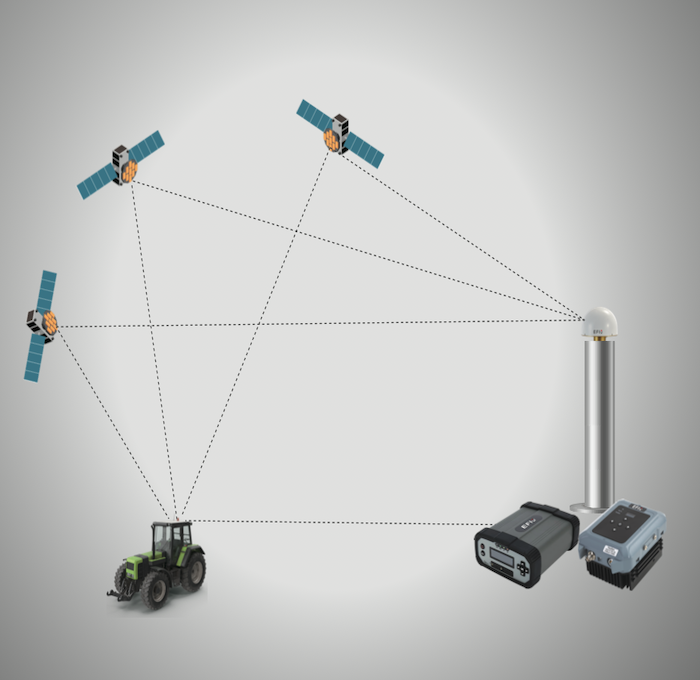
GNSS reference stations play a crucial role in providing accurate positioning data for various industries. They serve as fixed points on the Earth’s surface that continuously monitor satellite signals, allowing mobile receivers to correct their positions in real time. This process is essential for applications like surveying, precision agriculture, and autonomous navigation, where high accuracy is required. EFIX has developed solutions that ensure reliable and precise GNSS operations for these critical applications.
Enhancing Accuracy Through RTK Systems
Real-Time Kinematic (RTK) positioning relies heavily on data from GNSS reference stations. By comparing signals from multiple satellites, reference stations calculate error corrections that are transmitted to mobile GNSS receivers. This enables centimeter-level accuracy for field operations. They provide seamless integration with advanced hardware, ensuring minimal latency and consistent data flow. EFIX equipment is designed to optimize this process, allowing users to benefit from precise positioning without interruptions.
Flawless Data Integrity and Industrial Design
Maintaining reliable performance in challenging environments is key for any GNSS reference station. EFIX offers the F-NET Pro GNSS, which provides FLAWLESS GNSS DATA INTEGRITY through an industrial design that resists dust and water (IP67 rating). This robust construction minimizes downtime caused by environmental factors, while its integrated power supply supports continuous operation 24/7. Such features ensure that data collected remains consistent and dependable, even under harsh conditions.
Conclusion: The Role of EFIX in Reliable Positioning
In conclusion, GNSS reference stations are indispensable for accurate RTK positioning, providing the foundation for high-precision navigation and surveying tasks. By leveraging their expertise, EFIX ensures that users receive reliable data with minimal disruptions. Their industrial-grade F-NET Pro GNSS combines durability, uninterrupted operation, and precision, demonstrating the critical role reference stations play in modern geospatial technology.
