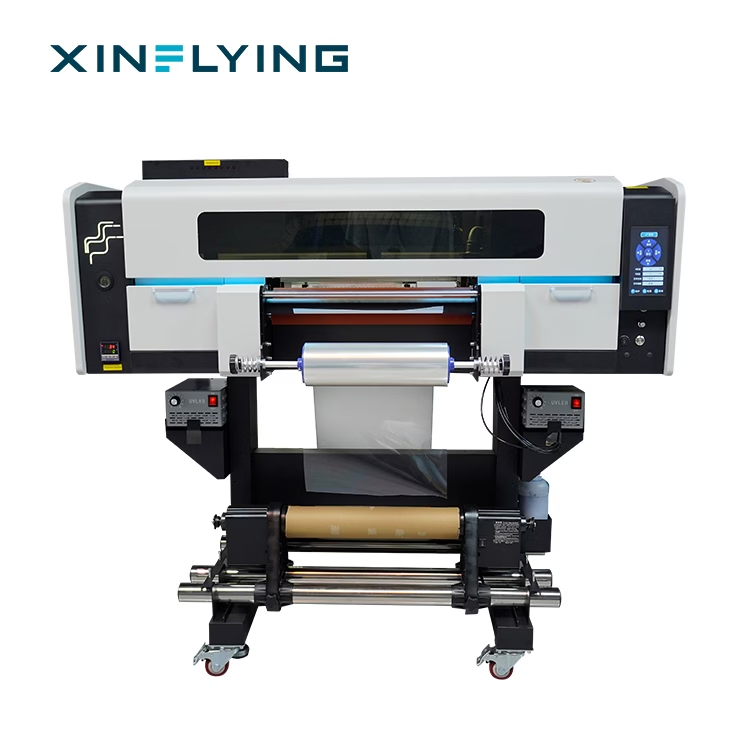
Choosing a UV DTF printer is a strategic investment for printing businesses seeking to expand their product offerings without allowing equipment costs to erode profitability. The challenge is finding a machine that meets production requirements, delivers consistent output, and supports future growth at a reasonable investment level. Rather than selecting equipment based solely on its purchase price, businesses should evaluate productivity, operating expenses, application flexibility, and long-term return on investment (ROI).
Evaluate Production Needs Before Comparing UV DTF Printer Price
The first step is to define the business’s actual production requirements. A small customization studio handling short-run orders has different priorities from a commercial printing company processing recurring bulk orders. Print width, output quality, order volume, and turnaround expectations all influence the appropriate equipment configuration.
When comparing UV DTF printer price quotations, buyers should check which components and services are included. Printheads, lamination systems, control boards, software, installation, training, and warranty coverage can affect the total investment. A lower quotation may not represent better value if essential components or support services require separate spending.
Demand forecasting also matters. Businesses should estimate average monthly orders, seasonal fluctuations, and expected customer growth. Purchasing excessive capacity creates unnecessary capital costs, while insufficient capacity can lead to missed orders and expensive production bottlenecks.
Match Equipment Capabilities With Revenue Opportunities
Equipment capabilities create value when they correspond to products customers are willing to purchase. UV DTF printing supports the production of decorative transfers for suitable hard surfaces, including glass, acrylic, metal, and selected plastics. This can help print shops serve promotional merchandise, personalized gifts, packaging, and product-label markets.
However, additional features only improve ROI when they support commercially viable work. Buyers should assess whether the printer can handle their expected designs, materials, finishing requirements, and order sizes. They should also evaluate repeatability, color consistency, and the time needed to switch between jobs.
The XF-420S i1600-U1 integrated printer from Xinflying provides an example of equipment designed around application flexibility. Its stated configuration combines 3D embroidery and UV DTF printing capabilities, with a 420 mm printing width and a Hoson control board. The system is equipped with four Epson i1600-U1 printheads and an integrated lamination system featuring a high-adhesion rubber roller.
These features may interest businesses seeking to consolidate complementary decoration capabilities. Nevertheless, buyers should confirm the available configuration, production speeds, supported materials, and suitability for their specific applications before estimating potential revenue.
Calculate Total Ownership Costs, Not Just Purchase Costs
A realistic investment assessment includes both initial and recurring expenses. Beyond the machine itself, operating costs can include UV ink, transfer films, cleaning supplies, replacement parts, labor, electricity, software, and maintenance. Film waste, failed transfers, and downtime can further increase the effective cost of each saleable item.
According to equipment-cost guidance from Castle Ink, ink consumption, transfer film, lamination materials, and maintenance are important elements of UV DTF operating expenditure. Actual costs vary with print coverage, production methods, and consumable prices.
A useful comparison calculates the total cost of ownership over a consistent period, such as three years. Each shortlisted machine should be assessed using the same assumptions for production volume, consumable consumption, maintenance, and expected service life.
For example, a printer with a higher initial cost may prove more economical if it reduces labor requirements or material waste. Conversely, advanced capabilities may offer little financial benefit if the business lacks sufficient demand to use them.
Use Break-Even Analysis to Measure Potential ROI
Businesses can evaluate investment feasibility by calculating the contribution margin per saleable unit. This is the selling price minus the variable costs directly associated with producing that unit.
The break-even formula is:
Break-even units = Monthly fixed costs ÷ Contribution margin per unit
Suppose a printing business has monthly fixed costs of $2,400 and earns a contribution margin of $4 per transfer. It must sell 600 transfers per month to cover those fixed costs. This simplified example excludes taxes and any expenses not already included in the calculation.
To estimate payback time, divide the initial investment by the additional monthly cash contribution attributable to the equipment. Forecasts should account for realistic order volumes, rejected prints, idle periods, and customer acquisition costs rather than assuming full capacity from the first month.
This analysis helps buyers determine whether a quoted UV DTF printer price fits their financial targets. It also establishes measurable production and sales thresholds for evaluating performance after installation.
Choose a UV DTF Printer Manufacturer for Long-Term Support
Reliable supplier support can influence profitability just as much as machine specifications. Before purchasing, businesses should assess spare-part availability, technical response times, operator training, warranty conditions, and troubleshooting procedures.
A qualified UV DTF printer manufacturer should be able to explain equipment limitations, consumable requirements, and recommended maintenance practices. Buyers should request demonstrations or sample prints using representative artwork and materials whenever possible. These checks help verify whether advertised capabilities translate into acceptable commercial results.
Xinflying offers printing equipment for businesses exploring integrated and specialized digital printing workflows. Its XF-420S combines UV DTF printing and 3D embroidery capabilities in one system. For prospective buyers, the important question is whether this configuration fits their product mix, floor space, staffing, and expected order volume. A detailed quotation and application test can help establish that fit before a purchasing decision.
Achieve Sustainable ROI Through Better Equipment Selection
Balancing capabilities and investment costs requires more than finding the cheapest machine. Businesses need equipment that fits current demand, supports profitable applications, and offers a practical path toward expansion. Evaluating operating expenses, break-even volume, supplier support, and verified performance provides a stronger foundation for purchasing decisions.
For companies considering Xinflying equipment, the XF-420S is worth evaluating when combined decoration capabilities align with their business strategy. Comparing its verified specifications and full operating costs against realistic sales forecasts can help buyers choose equipment that supports sustainable returns rather than simply minimizing upfront expenditure.
