Purchasing a UV DTF printer is a capital investment that affects production costs, order fulfillment, and long-term profitability. For printing businesses, wholesalers, and custom-product manufacturers, the lowest quotation does not necessarily represent the best value. A more reliable evaluation considers equipment configuration, consumables, maintenance, operating efficiency, and supplier support. Understanding these factors helps buyers compare machines on their actual production potential rather than purchase price alone.
Equipment Configuration Determines the Initial Investment
The initial equipment cost depends on printing width, printhead configuration, production capacity, and included software. Entry-level machines may suit businesses testing demand, while production-oriented systems are better suited to larger orders and recurring commercial contracts.
Buyers comparing a UV DTF printer price should examine the equipment specifications alongside the quotation. A machine with more printheads may offer greater output capacity, but its value depends on actual demand, operating costs, and the ability to keep the equipment productively occupied.
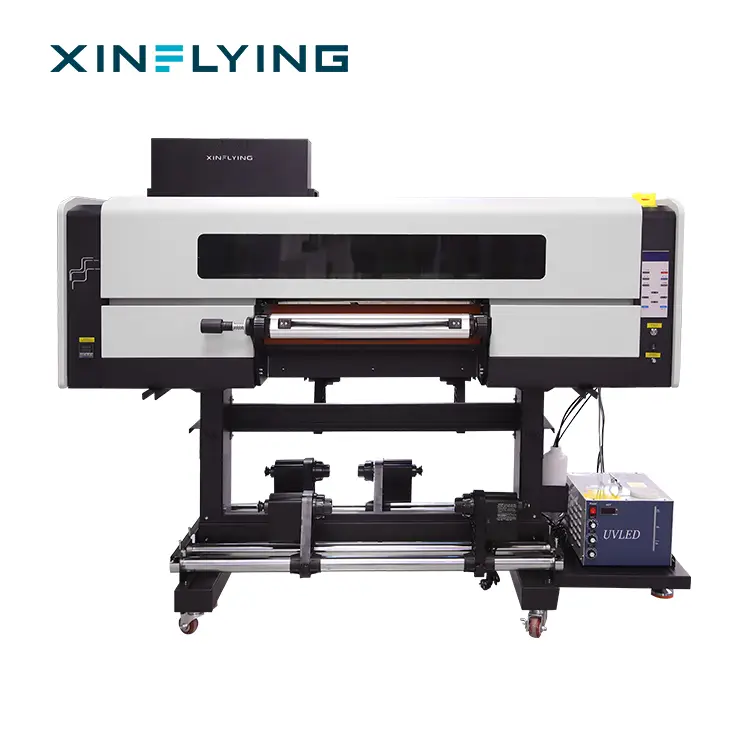
For example, Xinflying offers the XF-600 24-inch UV DTF printer, equipped with three Epson i3200-U1 printheads. Its published specifications list printing speeds of 6.28 m²/h in 6-pass mode and 4.85 m²/h in 8-pass mode. The system supports CMYK, white, and varnish printing for professional UV transfer applications.
Consumables and Production Costs Add Up
The purchase invoice represents only one part of the investment. UV DTF production also requires UV-curable ink, A+B transfer film, cleaning supplies, and other materials needed for routine operation. Consumption varies with artwork coverage, print settings, transfer dimensions, and production waste.
Businesses should estimate consumable expenses using representative jobs instead of relying on generic cost-per-print figures. Printing a small logo and producing a large, densely colored transfer can require substantially different amounts of ink and film.
A practical calculation divides total material expenses by the number of acceptable transfers produced. This approach accounts for failed prints and setup waste, helping purchasing teams establish realistic production costs and quote customers more accurately.
Maintenance and Downtime Affect Long-Term Value
Printheads, ink-delivery components, moving mechanisms, and UV curing systems require appropriate care. Routine cleaning, correct operating procedures, and timely maintenance help reduce avoidable interruptions. However, actual maintenance requirements depend on the machine, workload, operating environment, and manufacturer’s instructions.
A reliable UV DTF printer manufacturer should provide clear maintenance guidance, compatible consumables, technical assistance, and transparent warranty terms. Buyers should also confirm which components are covered, whether printheads are excluded, and how replacement parts can be obtained.
Equipment reliability matters because downtime can delay orders and increase labor costs. Xinflying’s XF-600 incorporates a ribbon cable system designed for stable data transmission between the control board and printheads. Its ink shortage alarm is intended to help prevent interruptions caused by insufficient ink. These features support operational consistency, although actual uptime depends on maintenance and working conditions.
Installation, Software, and Logistics Need Budgeting
The complete investment may include freight, import duties, insurance, installation, operator training, and software-related expenses. International buyers should clarify the delivery terms and identify which services are included in the supplier’s quotation.
The XF-600 product page lists Printfactory and Maintop as standard RIP software options, with RIlN, PhotoPrint, and CADlink listed as optional alternatives. Buyers should confirm the exact software package, licensing conditions, computer requirements, and any additional charges before placing an order.
A detailed quotation should separate the machine cost from shipping, taxes, installation, and initial supplies. Comparing quotations on the same basis helps prevent unexpected expenses after delivery.
Calculate Total Cost of Ownership Before Buying
Total cost of ownership (TCO) provides a more useful comparison than purchase price alone. It combines the initial investment with operating expenses over a defined period.
A basic calculation is:
TCO = Equipment + Consumables + Maintenance + Labor + Logistics + Downtime Costs
To compare machines fairly, businesses should use the same evaluation period and expected production volume. They can then divide projected TCO by the number of saleable transfers produced to estimate the cost per finished unit.
A lower UV DTF printer price may be attractive when capital is limited, but it should not outweigh meaningful differences in output, support, or material efficiency. Conversely, a more expensive machine may not generate a worthwhile return if demand is insufficient to use its capacity.
Buyers should also assess whether the equipment can accommodate anticipated order growth without creating excessive idle time or requiring premature replacement.
Choose a Supplier That Supports Business Continuity
A capable UV DTF printer manufacturer contributes more than hardware. Product documentation, technical support, spare-parts availability, warranty clarity, and assistance with operating issues all influence the ownership experience.
Before purchasing, businesses should request sample transfers using their target designs and intended substrates. Testing glass, metal, plastic, or other relevant surfaces helps verify adhesion, appearance, and suitability for the intended application. Results should be assessed using the actual production workflow rather than promotional images alone.
Before purchasing, prospective buyers should confirm current pricing, delivery arrangements, warranty coverage, and after-sales support directly with the supplier. Prospective buyers should confirm current pricing, delivery arrangements, warranty coverage, and after-sales support directly with the company.
Make the Investment Work Over Time
Evaluating printing equipment requires a balance between upfront affordability and sustainable operating performance. Consumables, maintenance, logistics, production efficiency, and downtime all influence profitability. A realistic cost model helps businesses identify the equipment that best fits their order volume and growth plans.
Rather than selecting a machine solely by its UV DTF printer price, buyers should compare documented specifications, calculate expected cost per saleable transfer, and assess the supplier’s long-term support. With these factors considered together, businesses can make a more informed investment decision and evaluate solutions such as Xinflying’s XF-600 against their actual production requirements.
