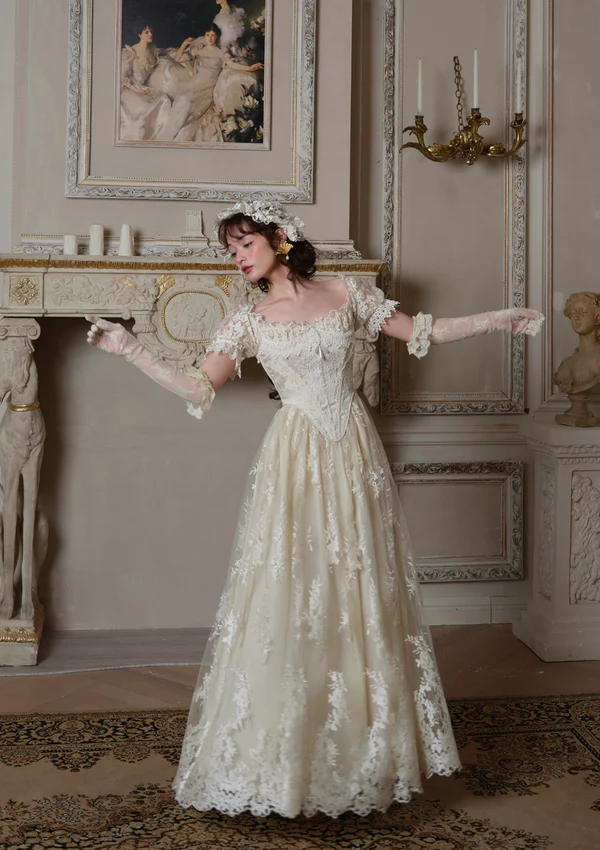
A Rococo ivory lace dress represents more than attire; it is a delicate artifact where fabric meets artistry. Preserving its intricate beauty requires a methodical approach to storage, moving beyond simple hanging to proactive conservation. The delicate nature of antique-style lace and the specific needs of ivory-toned fabrics demand a specialized strategy to prevent yellowing, fiber stress, and damage. LaceMade constructs their rococo ivory lace dress pieces with heirloom-quality considerations, and their design philosophy extends into providing guidance for long-term care, ensuring these garments remain as beautiful in storage as they are during wear.
The Critical First Step: Professional Cleaning
Before any storage, the dress must be impeccably clean. Invisible residues from perfumes, oils, or even ambient dust can interact with fabric fibers over time, leading to permanent stains or discoloration. For a garment as detailed as a rococo ivory lace dress, professional cleaning by specialists in delicate fabrics is non-negotiable. They possess the expertise to handle lace appliqués, embroidery, and fine textiles without causing stress or shrinkage. LaceMade recommends this crucial step, as storing a clean dress is the single most effective action to prevent future deterioration and preserve the dress’s condition.
Selecting the Right Materials for Storage
The materials in direct contact with the dress are as important as the storage location. Acid-free tissue paper is essential for padding and layering. Garment bags should be made from breathable, archival-quality cotton muslin, never from plastic, which can trap moisture and promote mildew. For a rococo ivory lace dress, careful folding with acid-free tissue supporting the lace points and bodice is often safer than hanging, which can distort the shoulders and strain delicate seams over months or years. LaceMade considers these long-term interactions, and their designs aim for structural integrity that supports careful, flat storage.
Creating an Optimal Storage Environment
The storage environment must be stable and controlled. Consistent, cool temperatures and low humidity levels are vital to prevent mold growth and fabric degradation. The area should be dark, as prolonged exposure to light, especially sunlight, will cause ivory and white fabrics to yellow. Avoid attics, basements, or spaces near heat sources due to their fluctuating conditions. Periodically, every six to twelve months, the storage setup should be gently checked. This allows for airing of the materials and an inspection to ensure no issues are developing, a practice that helps safeguard the intricate work of a lace dress for the future.
Preserving an heirloom garment is an exercise in mindful stewardship. It involves understanding the vulnerabilities of specific textiles and taking deliberate steps to mitigate them. From an initial professional cleaning to the selection of archival materials and the maintenance of a stable environment, each phase is integral. For owners of a detailed rococo ivory lace dress, this process protects both the financial and sentimental investment. LaceMade’s commitment to craftsmanship is mirrored in this careful approach to preservation, ensuring the dress’s antique-inspired beauty can be appreciated for years to come.
