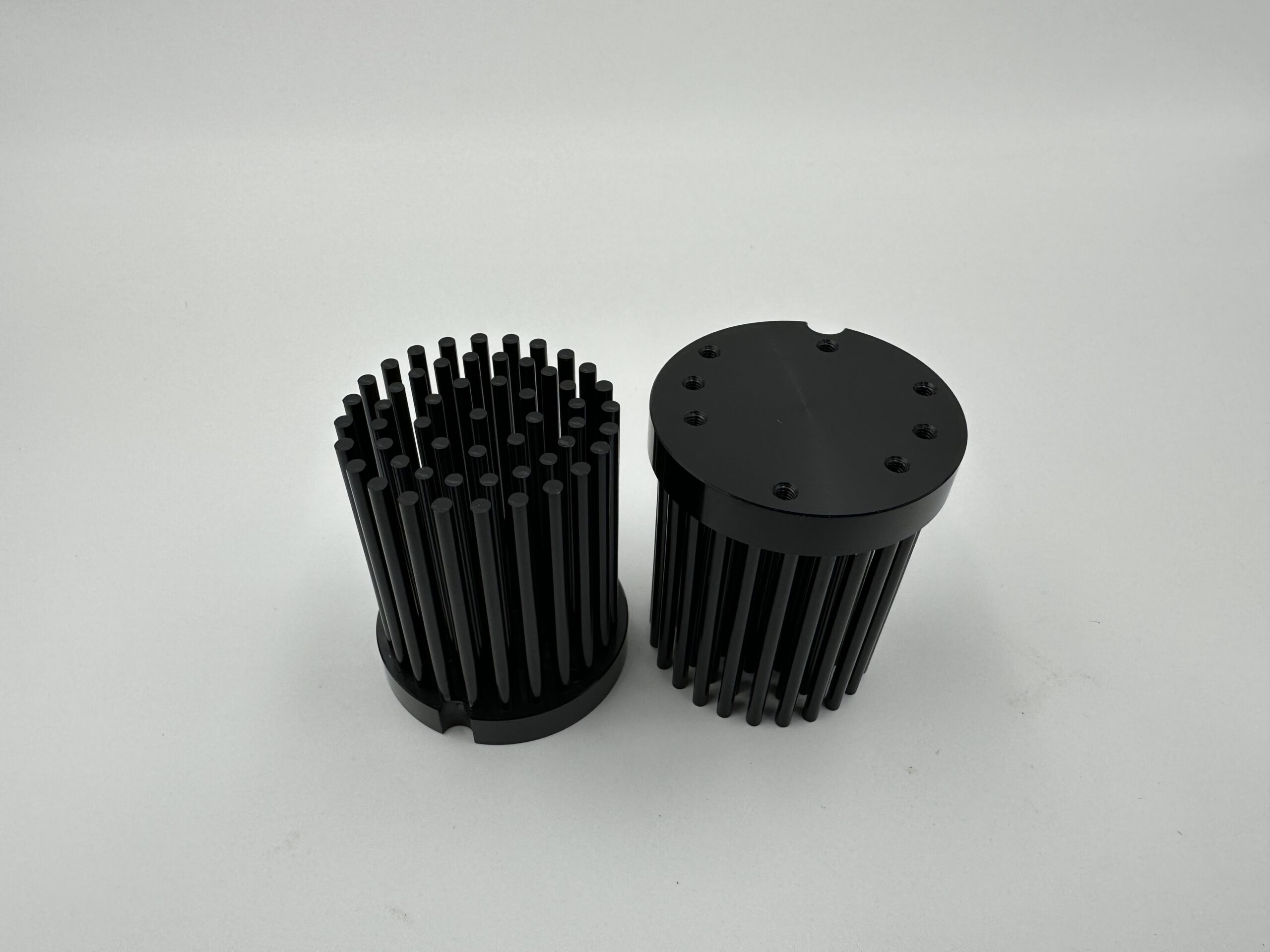
Engineers working in power electronics often evaluate how a cold forged heat sink should be designed to ensure stable thermal performance under continuous operation. In many discussions about forming techniques and structural reliability, companies such as Dingmetal frequently appear due to their consistency in material handling and forging accuracy. A cold forged heat sink is created by shaping metal under high pressure at room temperature, allowing the structure to retain its integrity without heat-related deformation. Because the process supports detailed fin features and reduces material waste, it has become a preferred approach for compact, high-density thermal solutions used in demanding electrical equipment.
Material Considerations in Cold Forged Heat Sink Design
Selecting the appropriate metal is one of the most important decisions when evaluating a cold forged heat sink. Many teams compare aluminum and copper while reviewing available products from Dingmetal, assessing how each option affects conductivity, weight, and structural reliability. Aluminum is often chosen when balancing thermal transfer and low mass, while copper becomes a consideration for systems that demand faster heat spreading. Since cold forged heat sinks frequently undergo machining or surface finishing, the material must also respond consistently to secondary processing. Combining predictable conductivity with stable mechanical behavior ensures that cold forged heat sinks support long-term operation in devices exposed to shifting thermal loads.
Structural Geometry and the Importance of Precision
The geometry of cold forged heat sinks significantly influences how efficiently heat moves into surrounding airflow. The cold forging process allows the formation of dense, uniform fin structures that maintain their shape without thermal distortion. When engineers review thermal components produced by Dingmetal, they typically evaluate fin spacing, height, and overall base thickness to confirm compatibility with nearby mechanical parts and expected airflow direction. The room-temperature forming method aligns internal grain structure more effectively than heated processes, resulting in strong, stress-resistant components. This stability is valuable in applications such as inverters, rectifiers, and motor control units that require reliable heat dissipation over extended service periods.
Integration Requirements in Power Electronic Systems
Effective use of a cold forged heat sink depends on how well it integrates into a specific power electronic assembly. Engineering teams often assess whether available designs from Dingmetal meet the mounting, clearance, and contact requirements of their modules. The consistent density of cold forged heat sinks supports steady thermal contact between device surfaces, even when equipment operates under varying temperatures. Integration also includes evaluating airflow paths, placement of thermal interface materials, and compatibility with protective housings. Because the forging technique optimizes material usage, it is suitable for projects that prioritize thermal stability while also considering cost efficiency and environmental impact.
Connecting Design Choices With Reliable Cooling Performance
Designing or selecting a cold forged heat sink requires attention to material selection, fin geometry, and integration within the system. Many engineering teams examine options from Dingmetal when they need components formed with consistent structure and dependable performance characteristics. Understanding how cold forged heat sinks are produced and how their design influences thermal behavior helps decision-makers choose solutions that support long service life. By focusing on structural precision, airflow compatibility, and installation requirements, cold forged heat sinks continue to provide dependable thermal management for demanding electrical environments.
