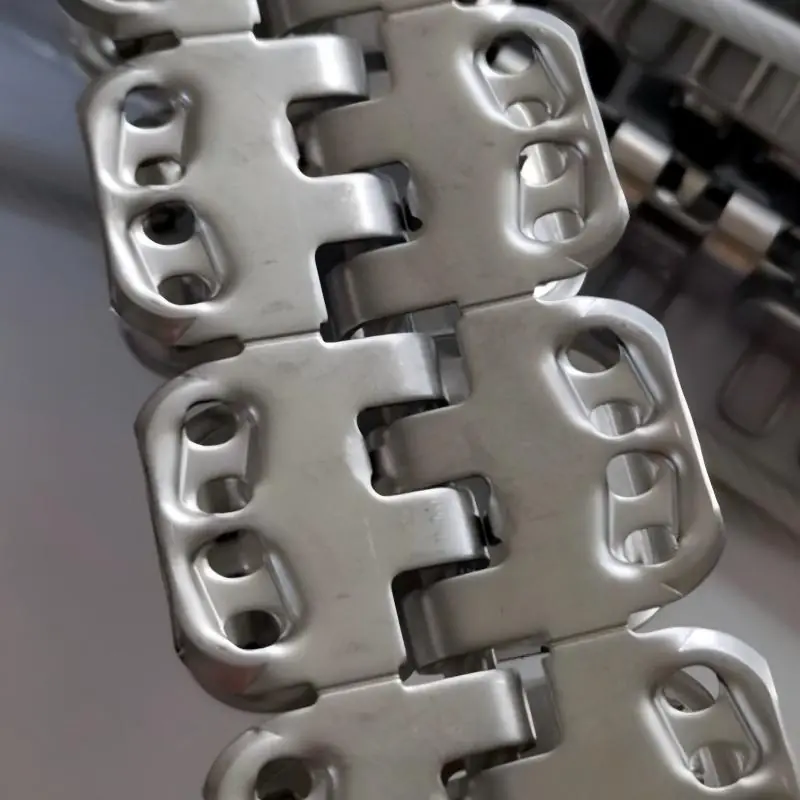
High-volume material handling systems require robust mechanical connections to maintain continuous operational throughput across modern industrial plants. Partnering with a dedicated conveyor belt fastener manufacturer allows plant managers to secure standardized hardware capable of enduring heavy dynamic stress without sudden structural fatigue.
Unplanned downtime caused by splice failure severely impacts production timelines in automated distribution facilities. Selecting engineered mechanical joiners stabilizes system performance while reducing emergency maintenance interventions.
Engineering Precision and Material Quality Standards
Sourcing components from a reliable conveyor belt fastener manufacturer ensures strict alloy purity and dimensional consistency across manufacturing runs. Metallurgical purity directly dictates how metallic joiners endure continuous mechanical stress during high-throughput conveying operations. Alloys containing chromium and nickel can provide corrosion resistance in demanding operating environments, while appropriate material selection supports durability under dynamic loading.
Utilizing high-tensile wire formulations allows a mechanical belt splice to sustain high working tension across extended service cycles. Precision wire forming can help achieve consistent fastener geometry for repeated bending around conveyor pulleys.
Mechanics of Load Distribution Across Belting Fabrics
Dynamic force distribution across belting fabrics determines how effectively a joint withstands continuous operational strain. Technical designs developed by Intake incorporate optimized hook geometries that prevent ply separation under continuous tension. Staggered hook configurations disperse tension vectors across multiple fabric strands, protecting the internal carcass matrix from localized tearing.
Hardware like the INTAKE CR Series features a design of 84 hooks per 12 inches, providing dense point distribution along belt edges. This geometric layout distributes mechanical strain evenly, preserving carcass integrity under severe operational pull.
Impact of Profile Geometry on Conveyor Component Lifespan
Selecting an appropriately engineered mechanical belt splice protects conveyor components from localized stress concentrations. Fastener height dictates how smoothly joint transitions occur over drive drums, return rollers, and scrapers. Low-profile mechanical hardware minimizes physical impact during roller engagement, protecting pulley lagging from premature abrasion and surface degradation.
Smooth mechanical transitions protect drive motors from recurring torque spikes during continuous belt rotation. Specifying precise wire gauge dimensions lowers mechanical vibration, supporting quiet and efficient belt travel across processing lines.
Machine-Applied Installation and Structural Consistency
Achieving uniform clinch depth across wide conveyor belts requires specialized application machinery and precise hardware geometry. Machine-applied fasteners deliver consistent compression, forming uniform clinches that penetrate belt covers without damaging internal reinforcement fabrics.
Standardized mechanical joints engineered by Intake utilize a 1.4 mm wire diameter to establish secure mechanical interlocks. Controlled wire deformation during machine application guarantees balanced holding power across the entire belt width.
Belt Thickness and Pulley Diameter Compatibility
Matching hardware dimensions to belting specifications remains essential for avoiding premature mechanical belt splice failure under continuous loading. Fasteners engineered for belt thicknesses ranging from 4.5 mm to 6.4 mm accommodate standard medium-duty synthetic belting constructions without requiring extensive belt skiving.
Operating over a minimum pulley diameter of 89 mm demands exceptional flexibility from metallic hook joints. Correct sizing prevents excessive hinge binding, allowing smooth flex cycles as belting wraps around small drive rollers. When both thickness and pulley diameter parameters are properly aligned, the splice experiences uniform articulation across its entire width—eliminating the uneven hinge wear that often leads to crooked belt tracking and edge damage over time.
Hinge Pin Dynamics and Rotational Flexibility
Central hinge pins act as pivot points, enabling mechanical joint strips to articulate smoothly around drive components. Utilizing approximate hinge pin diameters between 2.3 mm and 2.4 mm establishes stable pivot geometry without creating excessive joint play.
Choosing an experienced conveyor belt fastener manufacturer provides maintenance teams with wear-resistant hinge pins engineered for high-friction environments. Precision pin tolerances reduce joint chatter, extending the operational life of both fasteners and belting fabrics.
Minimizing Operational Downtime Through Fast Replacements
Performing rapid field interventions allows maintenance personnel to restore system operation without waiting for lengthy curing times. Installing a mechanical belt splice bypasses complex chemical vulcanization procedures, significantly shortening emergency maintenance windows during scheduled production runs.
Having reliable mechanical joiners pre-stocked on site prepares maintenance teams for unexpected belt damage. Fast hardware installation gets automated sorting lines back to full operational capacity with minimal schedule disruption. Every minute saved during an emergency repair directly translates into throughput recovered, making the speed advantage of mechanical splicing a measurable contributor to overall plant productivity and on-time shipment performance.
Strategic Procurement and Technical Support Integration
Technical buyers choose an established conveyor belt fastener manufacturer to secure uniform hardware quality across broad industrial distribution networks. Global manufacturers like Intake offer comprehensive product lines tailored to diverse industrial belt specifications and unique operating environments.
Accessing technical documentation and direct engineering support simplifies hardware selection for specialized conveyor setups. Industry professionals rely on Intake to deliver durable mechanical joining solutions that lower long-term maintenance overhead.
Conclusion
Evaluating mechanical joining components through metallurgical standards, geometric compatibility, and load ratings enhances overall conveyor system stability. Industrial facilities maintain high operational efficiency by selecting precisely manufactured joining hardware tailored to specific operational demands.
